A Chinese e-commerce app entering Singapore with zero brand trust. The instinct was to chase conversions. We bet on branding first — and the performance followed.
Vipshop — a major Chinese e-commerce platform — was entering Singapore with premium brands at flash-sale prices. But Singaporean consumers had no awareness and no trust. With 10.10, 11.11, and Black Friday approaching, the window to build a remarketing audience was closing fast.
Singaporean consumers had never heard of Vipshop. Running conversion campaigns without awareness was like selling to strangers — high cost, low return.
Without a base of engaged users, mega-sales campaigns would rely entirely on cold audiences — the most expensive way to drive conversions.
Limited creative assets and delays in new creative production. Needed to maximize impact with what was available.
Pressure to show immediate results while building the brand infrastructure needed for sustained growth beyond mega sales.
Double down on awareness two months before mega sales. KOLs to build trust. Brand ambassador to break barriers. Reach & Frequency buying to lock in exposure. TikTok TopView for top-of-mind. Then retarget the entire pool during sales events.


November recorded the highest app installs and purchases with stable, efficient cost per result. The warm audience pool converted exactly as predicted — and then some.
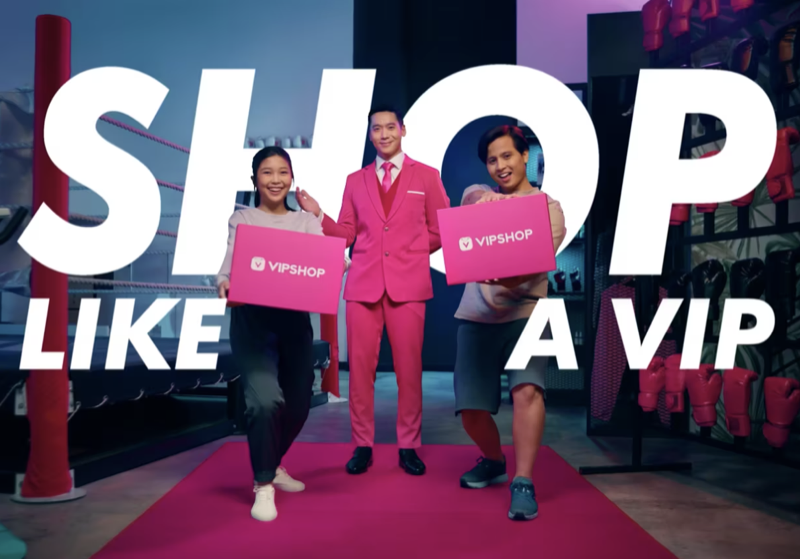
KOL videos hit 987K views. Joshua Tan brand ambassador campaign reached 1.1M with 10.8x frequency. Brand recall increased and search volume spiked from November onwards.
R&F campaigns delivered 2.5M reach and 18.4M impressions at 7.4x frequency. Despite being top-of-funnel, the campaigns still tracked 1,308 app installs and 153 purchases directly.
A single-day TikTok TopView campaign on Oct 6 drove 810K video views and lifted new app users for three consecutive days. CPI dropped to $2.87 (iOS) and $4.54 (Android) on launch day.
Prior investment in awareness overcame diminishing marginal conversions when budget scaled. The branding didn't compete with performance — it made performance possible.
For an unknown Chinese app in Singapore, KOLs and a local brand ambassador did what brand ads alone couldn't — gave permission to try. Brand trust transferred through people, not logos.
The value wasn't just in immediate conversions — it was in building a pool of video viewers, engaged audiences, and app users that could be retargeted with decreasing cost over time.
Combining out-of-home advertising with digital campaigns created more touchpoints and increased brand recall. The effect of each channel was greater because the others existed.
Google Trends showed a significant uplift in Vipshop brand searches from November onwards — the branding investment created organic demand that continued beyond paid campaigns.
The large pool of remarketing audiences built through awareness campaigns enabled cost per purchase to drop by more than half. Higher budget, lower cost — the flywheel working.
Overall new users spiked in November during 11.11 and Black Friday. The upward trendline of app unique visitors continued well after the mega-sales period ended.
Vipshop — one of China's largest online discount retailers — was expanding into Singapore with an app offering premium brands at flash-sale prices. The challenge: zero brand awareness, zero trust, and three mega-sales events (10.10, 11.11, Black Friday) approaching within 90 days. The internal team was focused on conversion campaigns, but running performance ads to cold audiences who'd never heard of the brand was burning budget. Creative supply was constrained, and there was tension between showing short-term results and building the infrastructure for long-term growth. Without trust, no amount of conversion optimization would move the needle.
Kaliber recommended a performance branding strategy — investing heavily in awareness two months before the biggest sales events. The approach had three pillars: KOL content to educate audiences about the brand and its offerings (one video alone hit 987K views), a brand ambassador campaign featuring Joshua Tan to break trust barriers and foster brand recall (1.1M reach, 10.8x frequency), and Reach & Frequency buying to guarantee controlled exposure at scale (2.5M reach, 18.4M impressions, 7.4x frequency). A strategic TikTok TopView campaign on October 6 drove 810K video views and lifted new app users for three consecutive days. The awareness campaigns built a massive pool of video viewers, engaged audiences, and app users — all feeding into a four-tier remarketing funnel across Meta, TikTok, and Google. Out-of-home advertising was integrated to create omnichannel touchpoints. Every dollar spent on awareness was an investment in cheaper future conversions.
marketing efficiency doubled from 3.07x to 6.37x. Cost per purchase dropped by more than half of historical costs. The campaigns drove 10,821 app installs and 782 app purchases across the period. Cost per install fell to $2.87 on iOS and $4.54 on Android during peak days. Despite being top-of-funnel, the awareness campaigns directly tracked 1,308 app installs and 153 purchases — proving the offers were strong enough to convert even at the awareness stage. Brand search volume on Google Trends spiked from November onwards. New app users surged during 11.11 and Black Friday. The upward trendline in app unique visitors continued beyond the campaign period. The branding investment didn't just pay for itself — it made every subsequent conversion campaign more efficient.