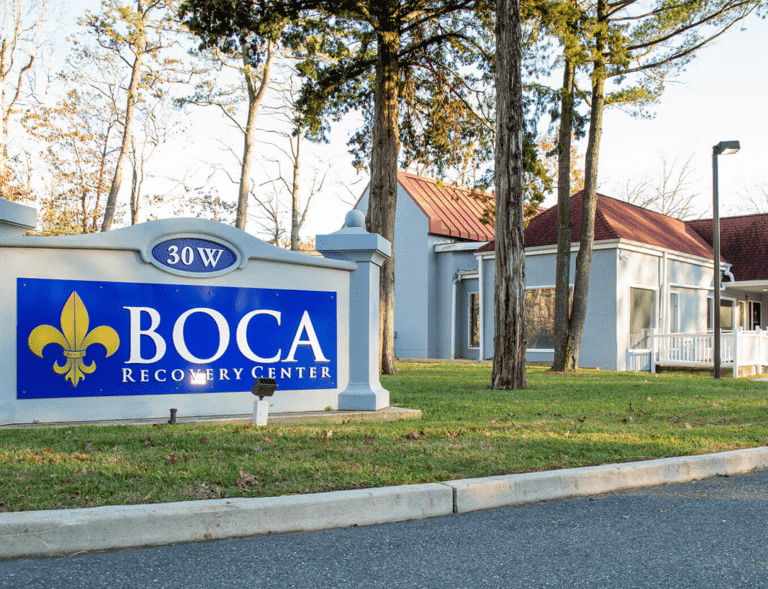
A luxury addiction recovery center in Florida, drowning in a $1.3M Google Ads account at $508 per call. Competitors were outspending them nearly 2:1. Kaliber didn't match their budget — we outsmarted their strategy.
Boca Recovery Center provides luxury addiction treatment in sunny Boca Raton, Florida. They'd historically spent $1.3M on Google Ads at $508 per call — burning through budget in one of the most competitive search markets in the US. Their competitors were investing over $330K per month. Boca needed to compete without matching that spend.
Competitors were outspending Boca nearly 2:1. Trying to win on budget alone was unsustainable — the market demanded precision, not volume.
All calls were treated equally. No integration with Salesforce or call tracking to identify which keywords and campaigns drove actual patient admissions vs. information seekers.
Addiction searches spike on mobile — people in crisis reach for their phone. The account had no mobile-specific campaigns or call-only ads to capture this intent.
Mobile-only campaigns to steal competitor traffic on the device where crisis searches happen. State-by-state targeting based on insurance policy generosity. Salesforce integration for offline conversion tracking — knowing which calls became patients, not just which calls happened. SPC to control every dollar by intent.
Mobile campaigns with call extensions and call-only ads captured searches competitors' desktop-focused campaigns missed. Competitor call volume was captured at a CPA lower than their own campaigns.
Focusing on states with generous insurance policies meant more calls converted to admissions. Better targeting, better economics — without increasing spend.
Offline conversion tracking through Salesforce revealed which keywords drove actual patient admissions. Budget shifted from volume to value — conversions grew 82.7% while CPA dropped.
Competitors spent $330K/month. Boca scaled to $180K and won on strategy — mobile-first, state-level targeting, and conversion quality. Precision beats budget.
Addiction searches on mobile at odd hours are the highest-intent queries in this market. Mobile-only campaigns with call extensions captured what desktop campaigns structurally couldn't.
Integrating Salesforce offline conversion data meant the algorithm optimized for admissions, not calls. The difference between a $508 CPA and a $162 CPA was knowing which calls mattered.
State insurance policies are a hidden variable in healthcare marketing. Targeting generous states turned geography into a strategic lever — same keywords, dramatically different conversion rates.
At half the competitor's budget, Boca Recovery achieved higher call volume, better conversion rates, and dramatically lower CPA. Strategy was the multiplier.
With SPC providing control and visibility, Boca expanded into highly competitive keywords like ‘Drug Rehab’ and ‘Alcohol Rehab’ — previously too expensive to target.
Salesforce integration meant every dollar could be traced from click to call to admission. Marketing became accountable to patient outcomes, not just call metrics.
Boca Recovery Center — a luxury addiction treatment facility in Boca Raton, Florida — had historically spent $1.3M on Google Ads with a CPA of $508 per call. The addiction recovery search market is one of the most competitive in the US, with their direct competitors investing over $330K per month. Boca was being outspent nearly 2:1, and the account had no mechanism to distinguish high-value calls from low-value ones. All calls were treated equally — no Salesforce integration, no call quality scoring, no offline conversion tracking. Meanwhile, the account was missing the mobile-first opportunity entirely. Addiction searches spike on mobile devices, especially during late-night and early-morning hours when people in crisis reach for their phone. Without mobile-specific campaigns or call-only ads, Boca was structurally unable to capture the highest-intent traffic in their market.
Kaliber implemented a precision-over-budget strategy built on four pillars. First, Single Purpose Campaigns gave granular control over every dollar by intent signal. Second, mobile-only campaigns with call extensions and call-only ads targeted the device where crisis searches happen — stealing competitor traffic their desktop-optimized campaigns couldn't capture. Third, state-by-state targeting based on insurance policy generosity meant Boca attracted patients whose treatment would be covered, improving unit economics without increasing spend. Fourth, Salesforce integration for offline conversion tracking closed the loop between clicks and patient admissions — the algorithm could finally optimize for what mattered: admissions, not just call volume.
In three months, Boca Recovery scaled from $20K to $180K in monthly ad spend — a 9x increase — while CPA dropped 68% from $508 to $162 per call. Call volume increased 72% and conversions grew 82.7%. Mobile-only campaigns captured crisis-intent searches that competitors' desktop-focused campaigns missed. State-level insurance targeting turned geography into a strategic advantage. And Salesforce offline conversion tracking meant every dollar could be traced from click to call to admission. At roughly half the competitor's monthly budget, Boca Recovery achieved superior results through precision targeting, not spending power. The SPC framework and offline conversion infrastructure became the foundation for continued growth.